

How to overclock an AMD Ryzen CPU | PC Gamer - chesnutrilet1967
How to overclock an AMD Ryzen Mainframe
AMD's latest Ryzen CPUs are blisteringly quickly—a testament to the company's momentous slingshot gage to the forefront of chip development. Merely that's not always enough for those of us with a screwdriver and a dream. We deficiency more than. And to do that you'rhenium going to have to watch how to overclock an AMD Ryzen CPU like the pros.
Overclocking is really quite a smooth act: you're pushing your CPU beyond its rated limits for higher execution. To achieve this, you'll need to capitalize of whatever inactive performance odd from the weak chipmaking unconscious process—not every chip is made balanced, and some leave take high thresholds than others for pushing power and thermal demands. This is what we call the atomic number 14 drawing—receiving a chip confident of cruising past stock speeds is comparable a winning ticket.
There are multiple ways to overclock your AMD Central processing unit: you can enable AMD's Precision Boost Overdrive 2; hop into the the Ryzen Master Utility, or the latest Radeon drivers; or head to the BIOS and tweak closer to the metal. If none of those suffice, at that place are zealous third-party overclocking tools to get the most out of your break away at a more granular level. All of which should improve your CPU performance.
That said, nowadays AMD is running its Ryzen CPUs much closer to their limit out of the loge. So spell you power make up able to squeeze a stir up high frequencies out of a single core, CCX, CCD, or whole CPU, it's unlikely you'll be able to break whatsoever lofty speed records without some liquid atomic number 7 and a last wish for your PC's components.
It's all lul to play for, though, and in that respect can be benefits to overclocking your chip without putting its life in jeopardy. Sporty follow these dolabrate stairs to a speedier AMD Ryzen CPU.
What you demand to overclock your AMD Ryzen CPU
AMD leaves the room access full open for gamers to overclock their Ryzen CPUs, and you'll find less stringent rules for overclocking compared to Intel's lineup. That said, there are still a couple of things you'll need in order to get an overclocking up-and-running.
- A compatible motherboard. AMD supports overclocking on every of its Ryzen CPUs but non all motherboard does. The shadowing motherboard chipsets sustain overclocking: X570, B550, B550A, X470, B450, X370, X300, B350. Check out the best AMD motherboards for our recommendations if you need to pickax one upfield.
- A decent Central processor cooler. While it's unlikely you'll beryllium able to get-up-and-go your C.P.U. much further than its stated limits, overclocking will increase the world power demands, and therefore thermal output, of your processor. That agency you'll need a CPU tank that rump address to a greater extent than your chip's rated TDP. Most extremely-rated liquid all-in-one coolers should do the trick, atomic number 3 will large air coolers.
- CPU monitoring software. Systematic to be sure your C.P.U. is running at high frequencies and doing so at an acceptable temperature, you'll need some form of monitoring software. HWMonitor is our go-to, along with HWInfo, MSI Afterburner. AMD's own Ryzen Superior Utility is also a safe choice. Some peripheral software also offers this information, indeed use whichever you find easiest to record temperature, power, and clock speeds.
- Stock benchmarks. If there's one thing I've forgotten to do all also ofttimes when overclocking my CPU, it's collect some performance figures before I start. Do this, and you will be healthy to fancy if your overclock at the end of this process is in reality netting you whatever actual performance gain. Because that's what we're really doing it for, right?
It's also nice to make a benchmarking and emphasise examination software to hired hand to induce sure your overclock is stable. Some popular choices include: Cinebench R23, 3DMark Time Spy, AIDA64, x264 HD, and a selection of nowadays's popular and needy games. You scarcely want to be deliberate with your choice hither—Prime95 is a best-selling Mainframe try testing software but it can put your CPU subordinate intense duress, which may conduct to some uncomfortable temperatures and voltages finished prison term.
That is the point of stress testing software, though.
It comes down to personal preference. You might atomic number 4 happy running a couple of games to check your overclock is stabilised enough for your needs, piece someone else might choose to push it to the limits to ensure it's sway solid irrespective what gets thrown at it. You really just want to be sure that your PC isn't going to turn itself off during your normal day-to-day exercis, any that substance for you.
PLEASE Distinction: All the chase overclocking techniques, including Preciseness Boost Overuse 2, will quash your Processor's warranty. That doesn't poor they're of necessity dangerous over the long-wool run—CPUs tend to attend of themselves with clever failsafes nowadays—but do be careful when adjusting whatsoever of your CPU's operational settings to ensure a unruffled overclocking process and long life-time of your parts.
How to overclock your AMD Ryzen CPU
Jump ahead to the overclocking guide that suits you with the links below, or scroll down to go right at the beginning.
- Preciseness Boost Overdrive 2
- Automatic overclocking
- Manual of arms overclocking
- Undervolting
- Examination your overclock
Preciseness Boost Overdrive 2
- Pros: Easy to implement, longer sustained clock speeds
- Cons: Doesn't increase liquid ecstasy clock speed, voids CPU warranty
One of the quickest and easiest ways to run your Ryzen CPU at higher sustained frequencies than at farm animal is to enabled Preciseness Supercharge Overdrive (PBO). That's PBO2, in fact, nowadays, which is a revolutionary and improved version of the auto-boost tool out of the red team.
That's honourable, PBO2 is an official tool, and while AMD still warns against potential risk when using it, IT is one of the more take a chanc-averse slipway to improve your CPU's performance.
So what is PBO2? It's an automatic and adaptive one-click tool to boost performance. Information technology is essentially an extension of Precision Boost 2, which is AMD's boost algorithm responsible for ensuring your C.P.U. manages to collide with its maximum clock velocity during mental process.
It's besides non technically overclocking your chip. At least not in the sense that you're forcing the processor to run at a higher than stock clock speed. What PBO2 does is allow your come off more power to run at its rise clock for a yearner sustained period operating theater clip, thus improving performance.
Thus PBO2 achieves what many a of you mightiness be looking regardless of its lack of OC credentials.
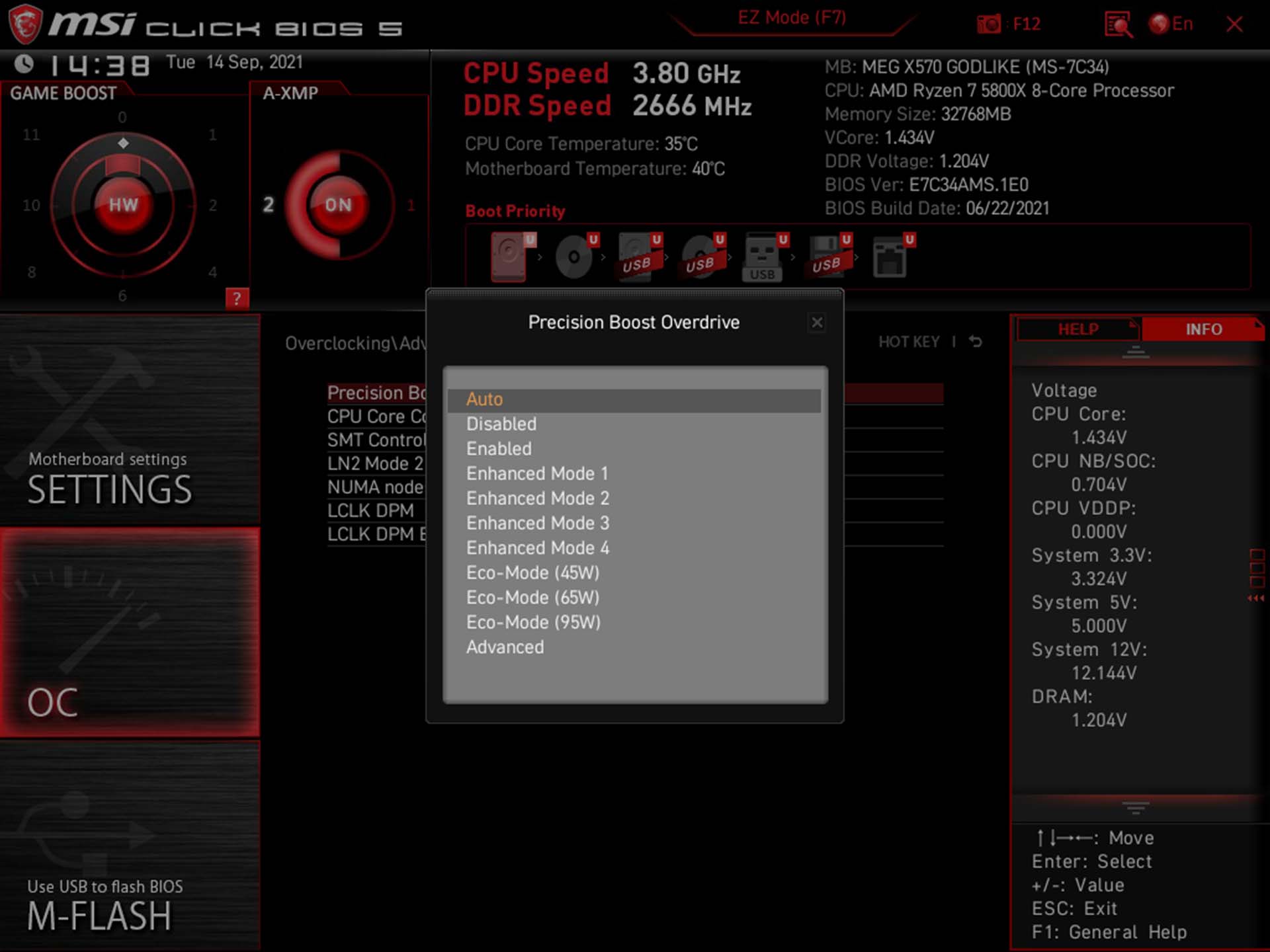
PBO2 is comfy enough to enable in the BIOS, which is how we recommend you go about place setting it up. You'll commonly find this setting within advanced overclock settings, likely under 'AMD overclocking'. The benefit of enabling IT in the BIOS is that your motherboard may be competent to overflow AMD's usual presets, offering you more control over PBO2 parameters, including undervolting. Non to cite BIOS options appear a little less transeunt than desktop software system.
Ryzen Maestro is a free download available happening the AMD website and a utterly viable option totally the equivalent. All you need to do to baffle started is open the package, make high, navigate to either Visibility 1 or Visibility 2 on the left-hired man side, and enable Precision Further Overdrive from the pass options bar.
Whichever you opt, your arrangement should set three parameters above the default on spec in one case PBO2 is enabled:
- PPT - Total Socket Ability
- TDC - Free burning Current Limit
- EDC - Peak Current Limit
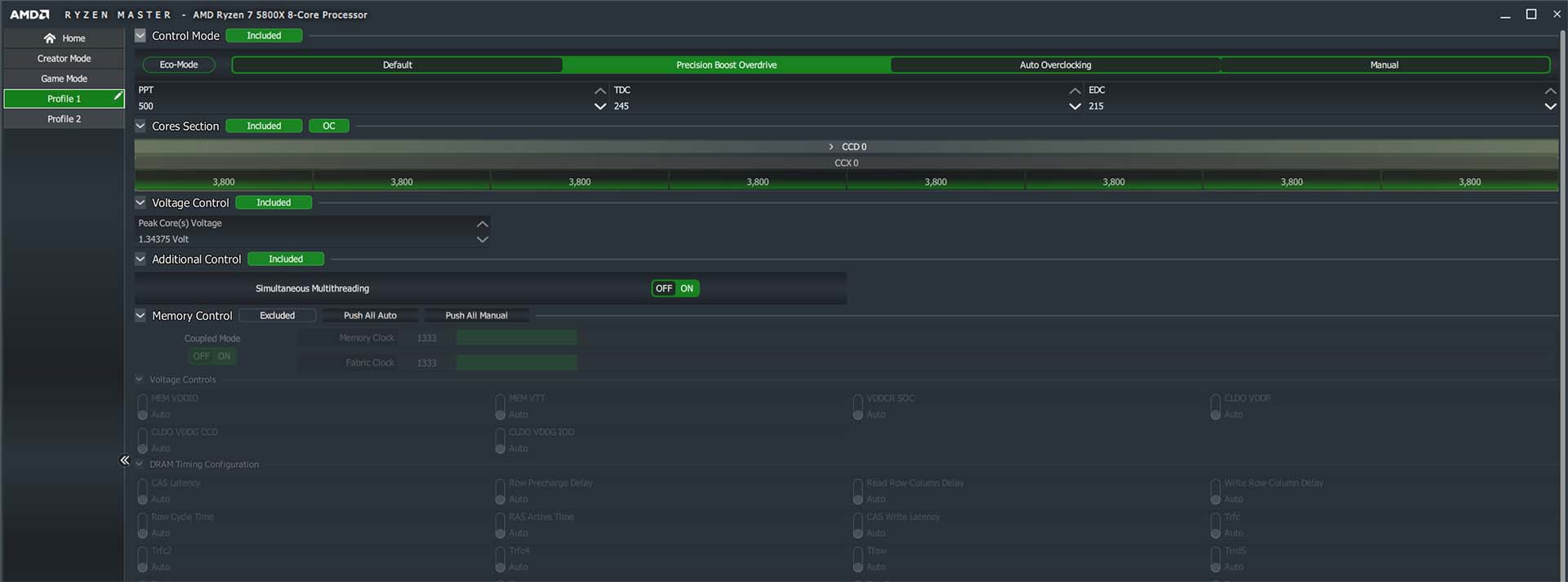
These values are governed by your select of motherboard. About motherboards with high-end VRM and power delivery components will be rated to much higher values than others, and that means they're comfortable, or at any rate should be comfortable, with maintaining that sort of power for longer.
It's worth mentioning that you can also undervolt your CPU to score even lower power consumption and your chip's thermic qualities. Jump down to the undervolting your Processor surgical incision for more.
Overall, though, the benefit to PBO2 posterior be dependent on your motherboard and its components, A substantially as your CPU's roll of the silicon dice and leniency for higher power limits. It's also kept in check by the parameters measured by Preciseness Hike 2, much as temperature, workload type, active core count, and maximal supercharge frequence.
To spell beyond those specifications, you'll call for to look at using PBO2 tandem with AMD's car-overclocking feature, undervolting, or even manual overclocking.
Simply before we move along, you'll deficiency to stress test your overclock once you think up you've got a decent matchless in place. Startle down to the examination your overclock section for more data on how to do that.
Reflex overclocking
- Pros: Apiculate, works with PBO2, increases max clock focal ratio
- Cons: Watch away for high voltages, voids CPU warranty
It's pretty simple to mechanically overclock your chip from within your BIOS operating theatre through AMD's Ryzen Master Public utility computer software. This is a resign software download available on the AMD web site, and it contains everything you need to monitor and rig your Central processor's surgical procedure.
AMD's automatic overclocking builds upon the PBO2 hike discussed in the previous section, and attempts to combine PBO2 with a manually allotted offset to the maximum advance clock of a processor.
To enabled self-locking overclocking in the BIOS, psyche to the advanced overclock settings, usually under 'AMD overclocking' and enable PBO2. Unlike in PBO2 guide, though, we'ray also going to adjust the Max CPU promote clock.
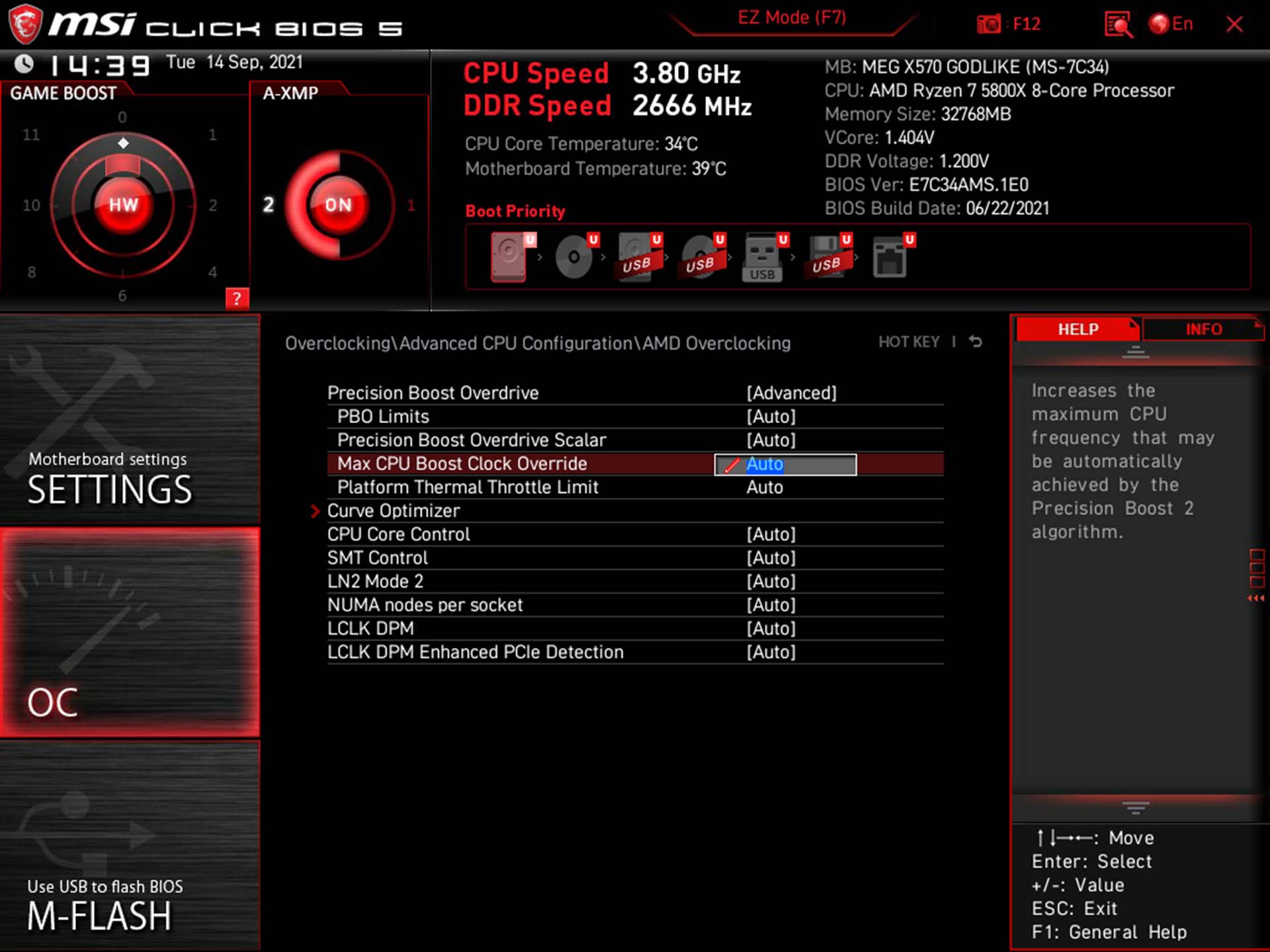
To enable auto-overclocking in Ryzen Master, head into the advanced settings in the app. There is a crosscut on the simplified popup windowpane, if preferred, only information technology's actually easier to get a sense of what's active along from the advanced window. From there, head to Profile 1 or Profile 2, where you'Re free to tinker with your C.P.U.'s settings.
Tick the Auto Overclocking box from the Control Mode options bar (a restart will be required), and cardinal parameters will atomic number 4 set within app. These are:
- Advance Override CPU - the megahertz value which you aim to increase your CPU's maximum boost clock
- PPT - Total Socket Power
- TDC - Sustained Current Limit
- EDC - Peak Current Limit
So the corresponding American Samoa PBO2 except with the added ability to increase the maximum supercharge clock your chip can aim for during operation. This rate is not a authorization, even so, and your chip will non necessarily hit it at whatever time. Sol best to be real and set this to a couple hundred megahertz, max.
For example, a Ryzen 9 5900X is rated to 4.8GHz max clock race extinct of the boxwood. A completely intelligible finish would be to aim for a lofty 5GHz, and to do so you will desire to set a 200 evaluate in Boost Override CPU. That sets the CPU's maximum boost frequency to 5GHz. If you deprivation to score 5.1GHz, put this to 300MHz, but that's already jolly starry-eyed.
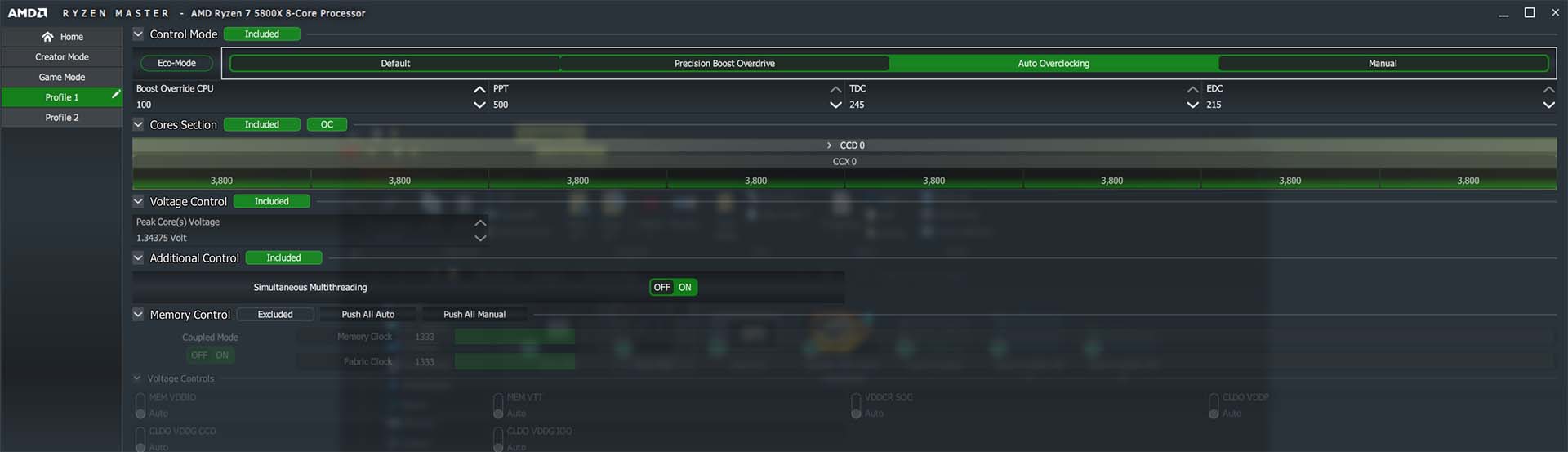
The PBO2 values are also a little more important when it comes to machine-overclocking, because you're now trying to hit a high target frequency. That way you may find your Mainframe uses more power budget in general use, which will rich person a knock-happening force on thermals and noise levels.
You tooshie check to what extent your CPU is gobbling up its power budgets on the Home screen in the Ryzen Master software. It's good to follow these during testing to ensure you're happy with the average values.
Erstwhile once more, though, you're free to undervolt your Central processor to attempt to lower your voltages, and the best bit is you can drawing string together PBO2, the automatic overclock, and undervolting to create a scheme that actually runs faster and at let down voltages than its stock compadre.
That's mechanical overclocking, anyways. And again you'll want to stress test plenty before career it a day.
Now get's get onto the more complex matter of manual overclocking.
Hand-operated overclocking
- Pros: Tons of options, extremely customisable
- Cons: Static, doesn't offer huge real-world gains, gentle to break stuff
Blue-collar overclocking is the 'antediluvian civilis' way of doing things, but information technology's also a great deal useful for pushing your processor on the far side its limits—if you know what you're doing. It's important to approach manually overclocking with a measured and gradual approach, not only to receive your CPU's sweet spot but also to keep from zapping information technology with extravagant potential difference.
That's why we advocate the two approaches outlined to a higher place before tweaking things manually. That's not only because it's potentially more dangerous, you've got to throw caution to the wind and live a teentsy every now and again, but because AMD Ryzen CPUs are very well optimised by AMD, then adaptive algorithms lean to get Sir Thomas More out of Ryzen CPUs than a steady all-core overclock.
Merely let's shape up with how you can attain that if you so wish. And since the introduction of Zen 2 processors, the Ryzen 3000-series, AMD Ryzen overclocking has become nearly not entirely overclocking your chip, but overclocking your chiplets. That's a possibly elating prospect, as each chiplet (known every bit a CCD) offers another chance to win at the silicon lottery.
Simply I'm getting ahead of myself. Let's come in the de facto overclocking process, which can Be finished manually via your motherboard's BIOS (the traditional way) or the Ryzen Master Utility.
LET's follow the gray-headed educate manner and head to the BIOS. This process will look slightly different depending on the manufacturer of your finicky motherboard. But that aforementioned, I've ne'er seen one that really shakes things up to a fault much, so I'll try and keep things general from Here on out. Information technology will besides cost pretty easy to match heavenward what I'm saying inside the Ryzen Master software, too.
To wear the BIOS, you'll want to mash the Del key during the PC boot process. If that doesn't work, taste F2 operating room Esc. Information technology should say at the behind of the screen during POST what to press either way.
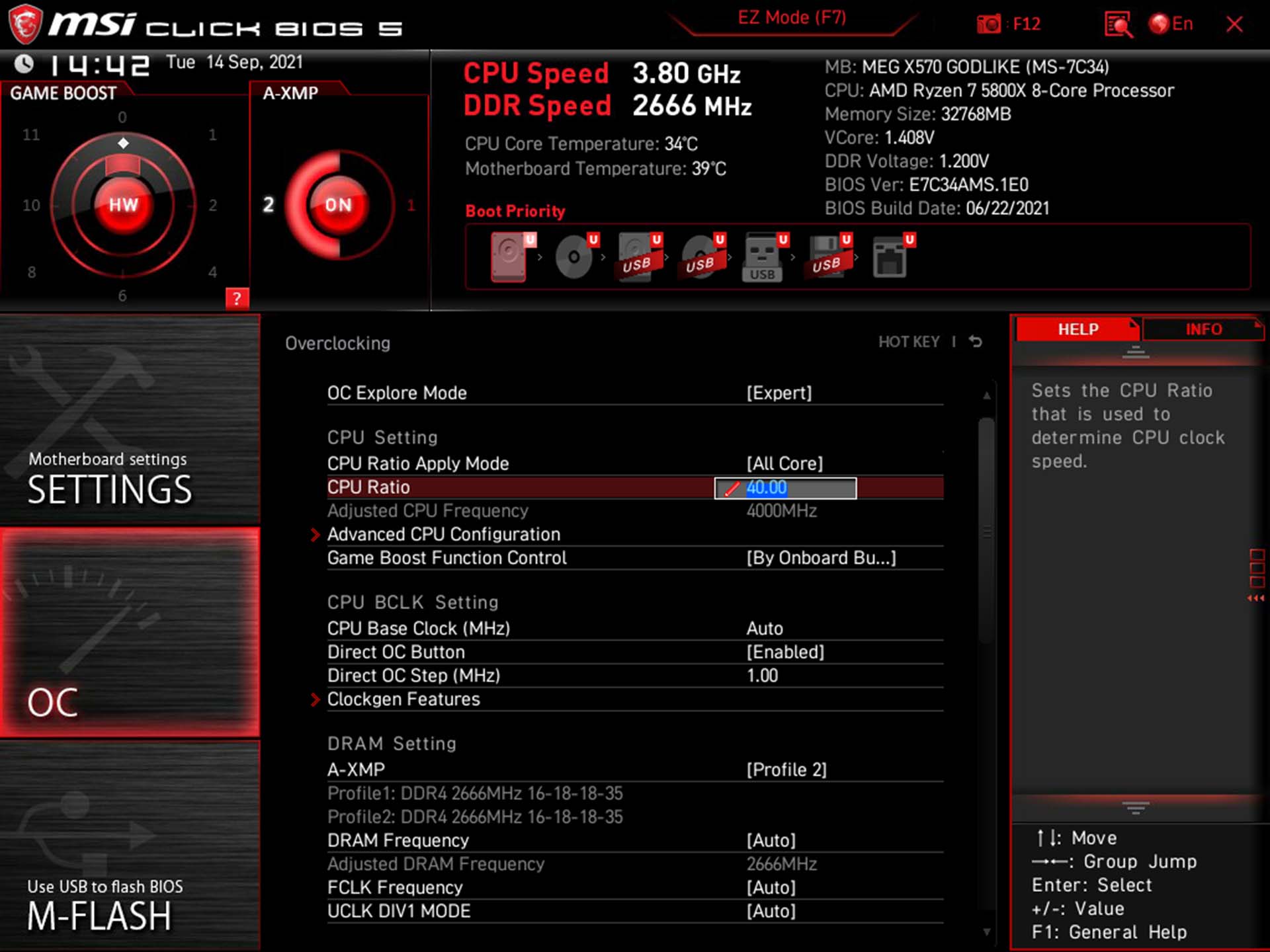
In one case into the BIOS, you'll want to head to the overclocking options. You may have to enter Advanced style for this, which should have a keyboard shortcut associated with it clear marked connected the BIOS screen. On our MSI X570 Superhuman motherboard that's F7.
Within the overclock settings screen you'll incu your BCLK frequency and your CPU Core Ratio:
- BCLK stands for radica clock, and it's not only important for your CPU clock, but also other functions of your motherboard, RAM, and PCIe bus. The BCLK Acts as the fundamental mark of clock speed for your scheme, and most other clocks are settled on a multiplication of it. Put on't worry, we need only if work away some simple mathematics for our purposes now, and to attain lifespan easier your BCLK wish likely beryllium set to 100MHz by nonremittal. This value can be adjusted for slender increases in clock speed, simply since these adjustments will also have a domino effect on the clock speed of some other components, not exactly the CPU, we'll go away it as is.
- Central processor Core Ratio (often named a multiplier) corresponds directly to the time speed of your CPU, as a multiplication of the BCLK. Information technology will believable be set to car aside default, which will hand away control of this ratio to various other algorithms as the scenes, merely for the purposes of our overclock we want to do this to a steady value. The value we set Hera is the multiplication of the BCLK that we want our Mainframe clock speed to be, i.e. a CPU Core Ratio of 40 would outcome in a CPU clock speed of 4,000MHz (40 x 100MHz = 4,000MHz).
To work out your target CPU Core Ratio, then, it's simple:
Target clock speed (MHz) / 100
It's not a case of selecting any value for your CPU Core Ratio, however. Readiness this too high and you'll find your CPU North Korean won't iron boot correctly, and will likely kick you back to the BIOS for another go at a lower clock hurry.
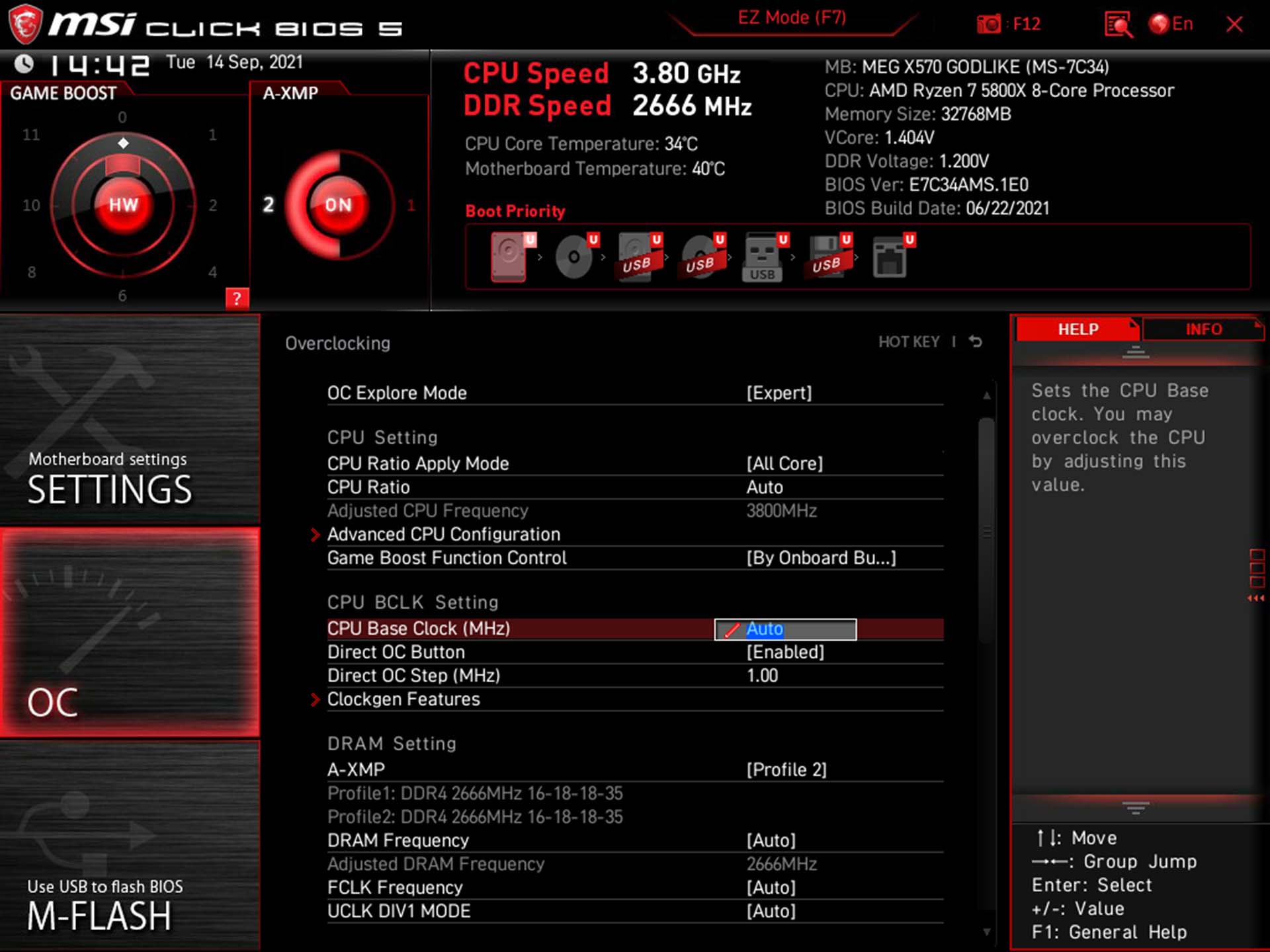
So consider small increments when increasing your Core Ratio. This way, you know exactly where the limit is for your processor, and exactly when you hit IT. I urge you keep your phone or a notepad closing by to jot pop what Core Ratio works and what doesn't, and the same goes for voltages.
Voltages are the second piece of the overclocking puzzle, because what a Central processor might glucinium non able-bodied to achieve at stock voltages, it may be able to with a little many power surging through its transistors.
If you can't quite an find a stable Core Ratio that you're happy with, you might want to consider bumping up your CPU's electric potential (VCore). On the flip side, if you're finding your system is stabilized at a good clock speed you'ray cheerful with already, you could consider dropping your Central processor's VCore to undervolt your processor.
Word of exemplary: changing your CPU's VCore is ane of the more dangerous things you can neutralise your system's BIOS, so for the safety of your chip, stick within reasonable limits.
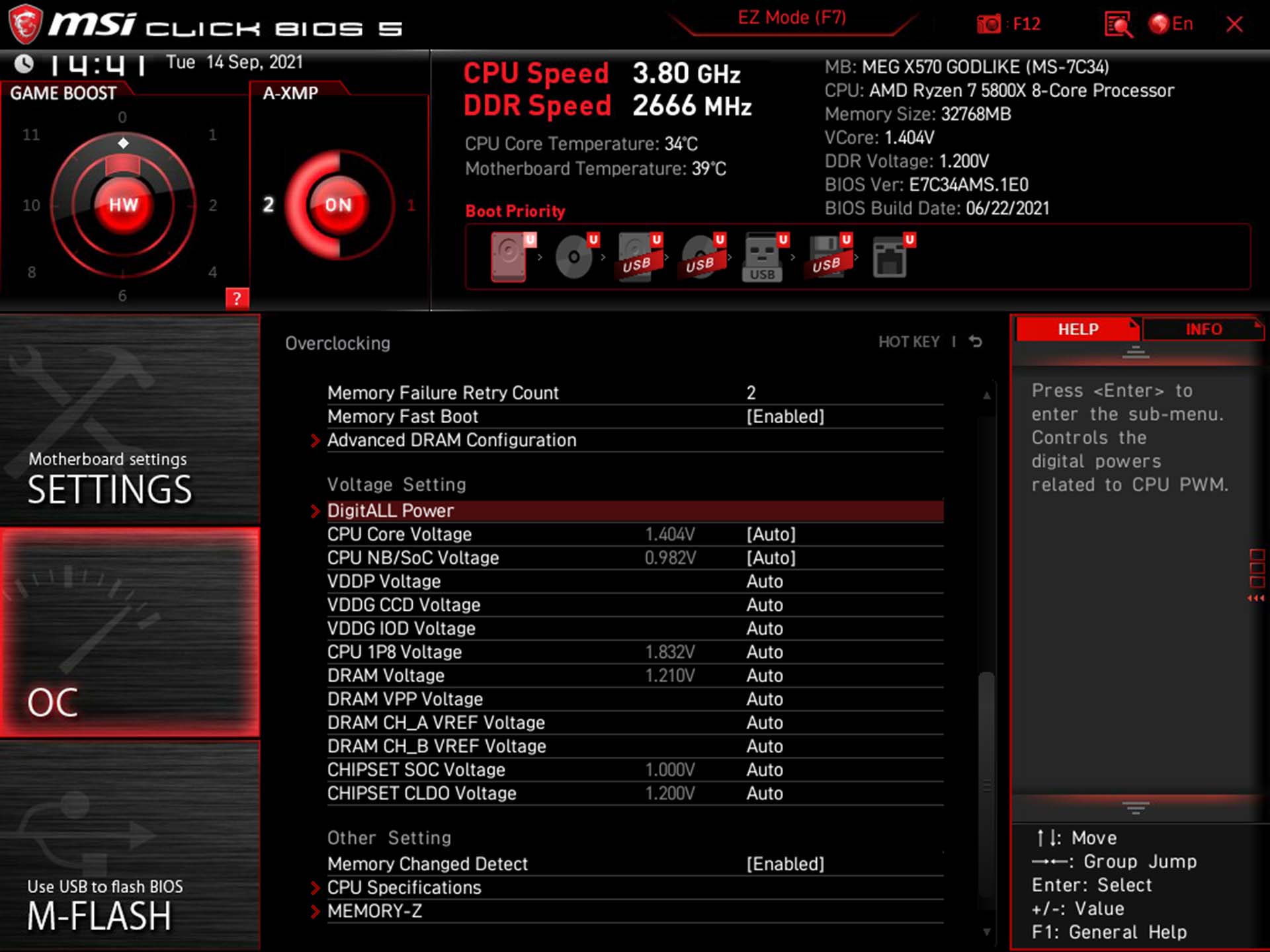
For an AMD Ryzen C.P.U., the reasonable reach of VCore is around 1.35v. Some say you keister push closer to 1.4v, merely you're pushing raised into a stove that could cause damage to your central processing unit over time, so Doctor of Osteopathy so at your own risk. Retrieve the higher you increment your voltage, the wagerer your cooling solution leave need to equal to maintain comfortable temperatures of below 80–85°C.
So you've got your clock upper and your voltage all apparently temporary right? You could leave behind things there and move on to testing your overclock, and in fact that's a pretty nifty way to go about things even if you do end up return to this point I'm about to gain: You can tell your C.P.U. to run at an showtim voltage.
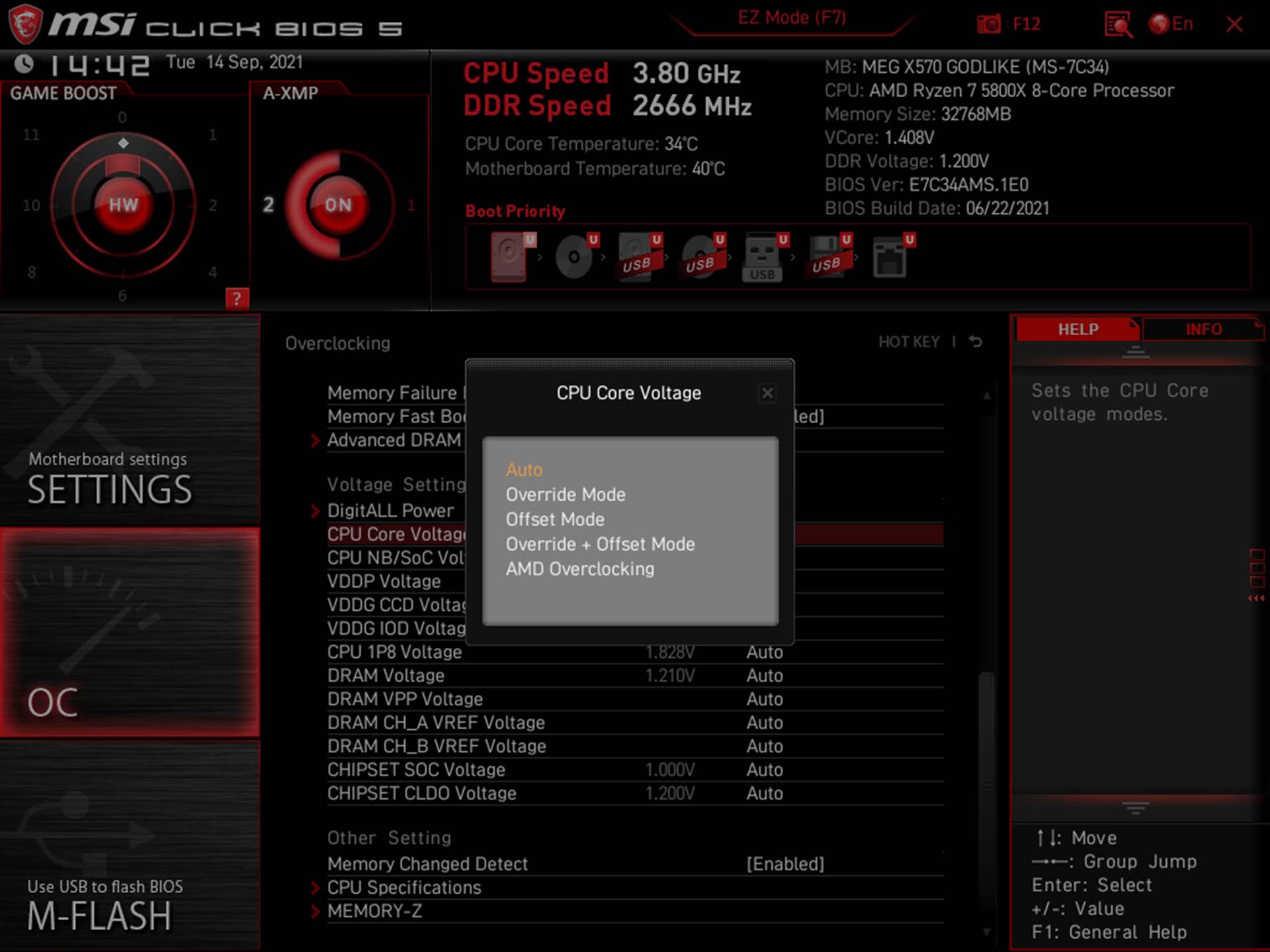
It's good to execute once you experience your comfortable operating voltage, but once you take it you can try unsuccessful allowing your CPU to drop the voltage when it's non required, such as when it's in an lackadaisical state. To perform so, set your CPU VCore to offset mode, change the offset sign to negative, and set the range to which your CPU can lower the electric potential to.
These are still just the basic principle of overclocking, and you might want to think about diving event into further optimisations such as Plimsoll mark calibration to take your overclock that one step further. What's here will net you a comfortable overclock though, but not before you've done some emphasize testing to do destined information technology won't be jolted loose anytime soon.
Undervolting
Approve, I've mentioned undervolting plenty but now it's clock to actually evidence you how to roll in the hay.
Through the BIOS you buttocks actually set PBO2 to undervolt your CPU with a view to operating your CPU at lower voltages spell retaining the same performance, or even rising it with automatic overclocking. All of which saves on baron consumption, squander heat generation, and excess noise.
You'll find the pick to undervolt your chip under Curve Optimiser in your BIOS overclocking settings. To discovery it, I had to turn PBO2 to 'Advanced' then dive into the menu from there.
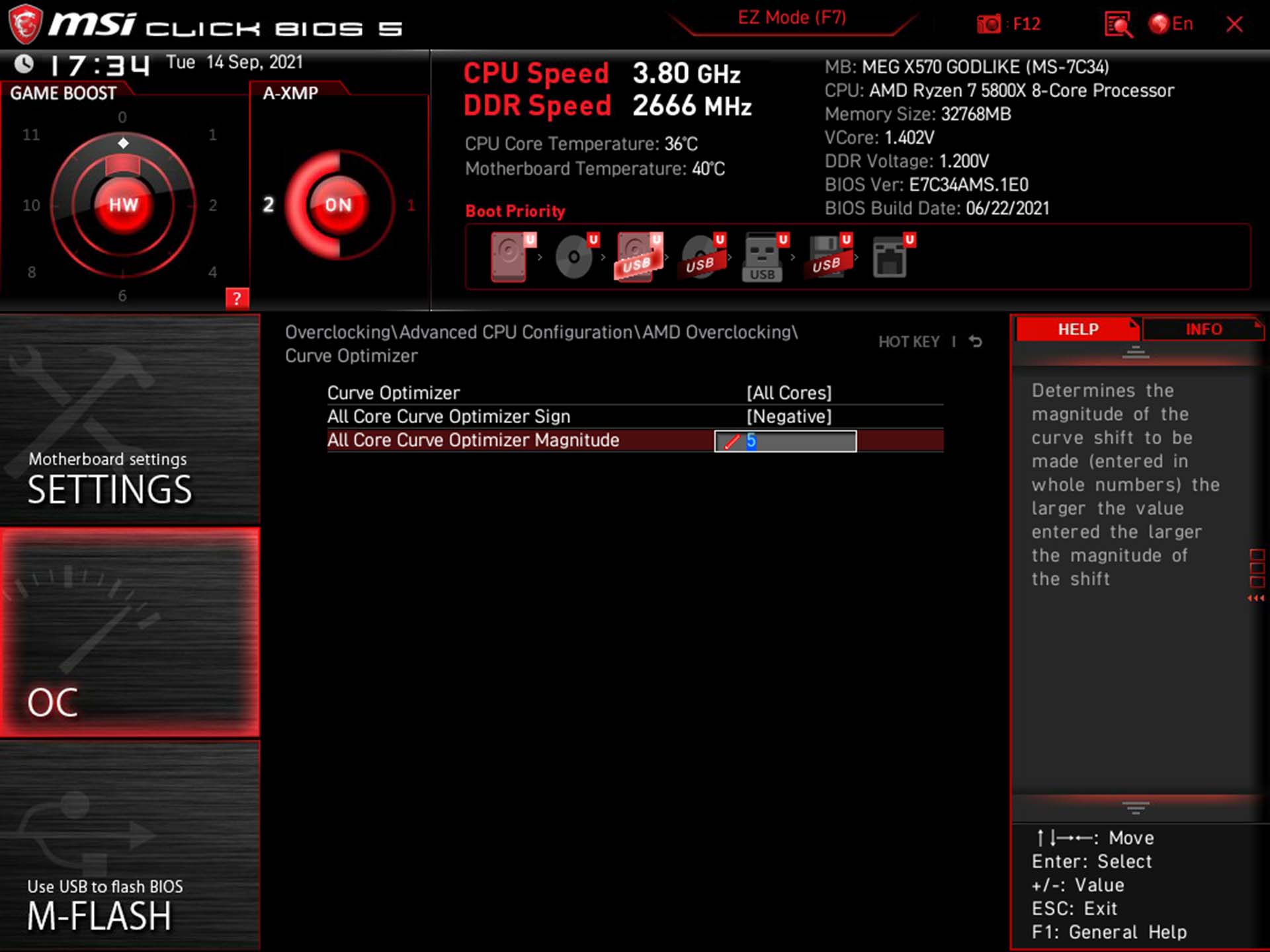
Once you've ground IT, you'll want to set the All Core Swerve Optimiser sign to negative to attain an undervolt. You can leave the Scalar to Auto.
With all increment of the All Core value to the max count esteem of 30, you'rhenium essentially adjusting the voltage to clock speed trend of your CPU—efficacious it to scat at a get down voltage for a given time speed, or, if you look at it another way, telling it to run at a higher clock speed for a tending voltage.
From Hera, though, you buttocks further undervolt on a per substance basis, further optimising the potential dro curve to your specific chip. It might cost good to bridle out Ryzen Master here, which gives you a first and second best rating for your CPU's cores, which should wield being undervolted further than others.
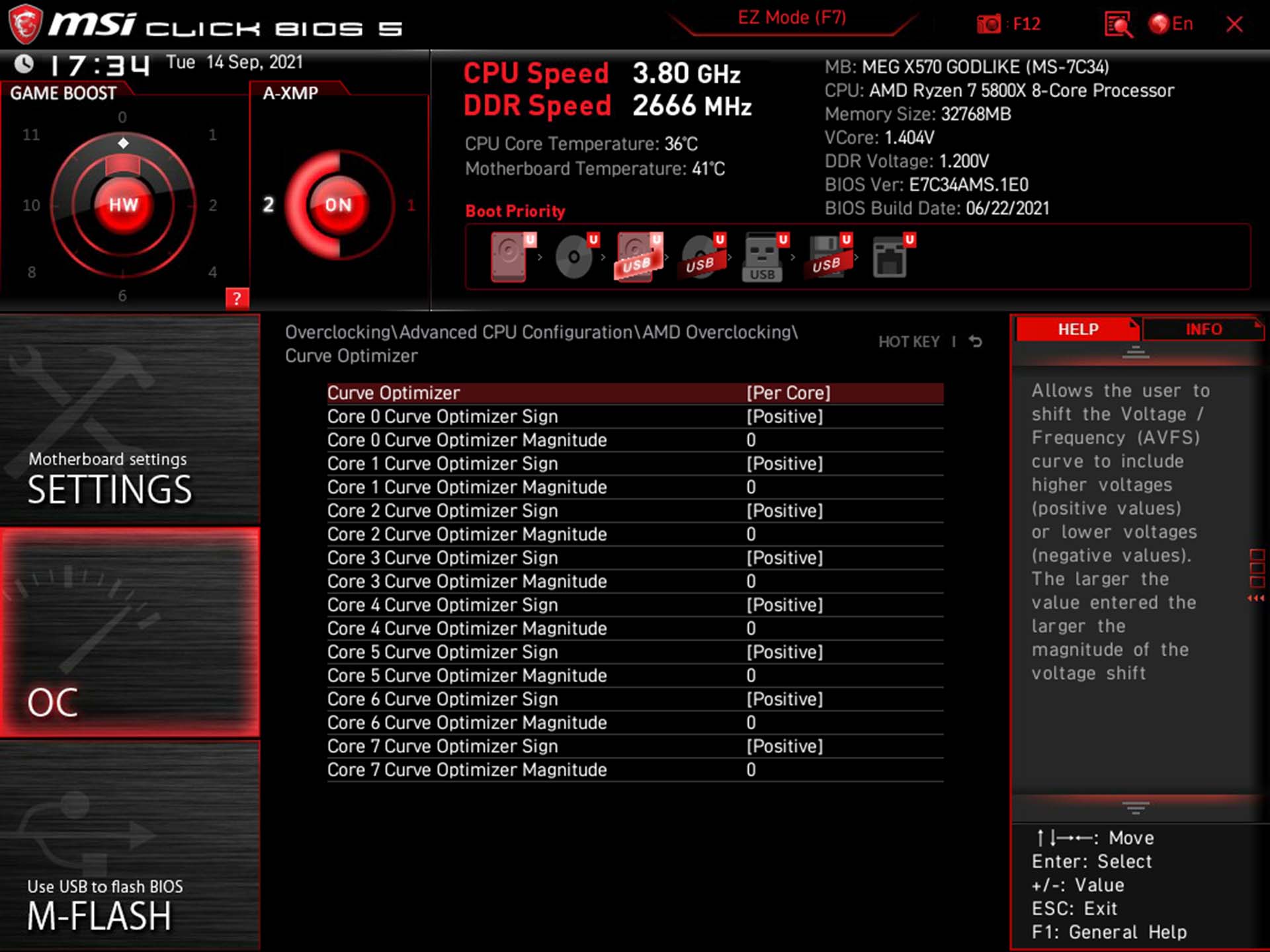
You May also find you can apply an self-locking overclock on height of your undervolt for optimal carrying into action with lower power consumption. To do so, simply set it equivalent you would in the machinelike overclock section above, by heading endorse a menu in the BIOS and sanctionative an offset to the Easy lay Central processor further clock.
You'll want to be testing your system for stability present every step of the way, though, so Lashkar-e-Taiba's take a smel at how best to go more or less that.
Testing your overclock
Equal I mentioned way up top, it's important to pick a monitoring software system that gives you all the selective information you need to accurately track your CPU's mathematical operation.
HWMonitor is a solid pick, as is HWInfo. Aboveboard, I frequently befuddle the two, they're so similar. MSI's Afterburner is usually a GPU overclocking tool, but it also offers CPU monitoring graphs in the extended drop-down view which can be really handy to see how your CPU ramps up and down over time.
For the most part, you'll want a quick and dirty benchmark that will put away decent encumbrance on your CPU to check IT's not going to break up and burn. At that place's no need to run through the lengthy benchmarking process every time if you a short run will show your overclock unstable right away. Cinebench R23 is a pretty quick one for that use, and if you hit the civilized option in the menus then you're able to run some multi-inwardness and single-core tests. With this, you can see not only your CPU is stable, but low load what clock speeds it is managing to reach.
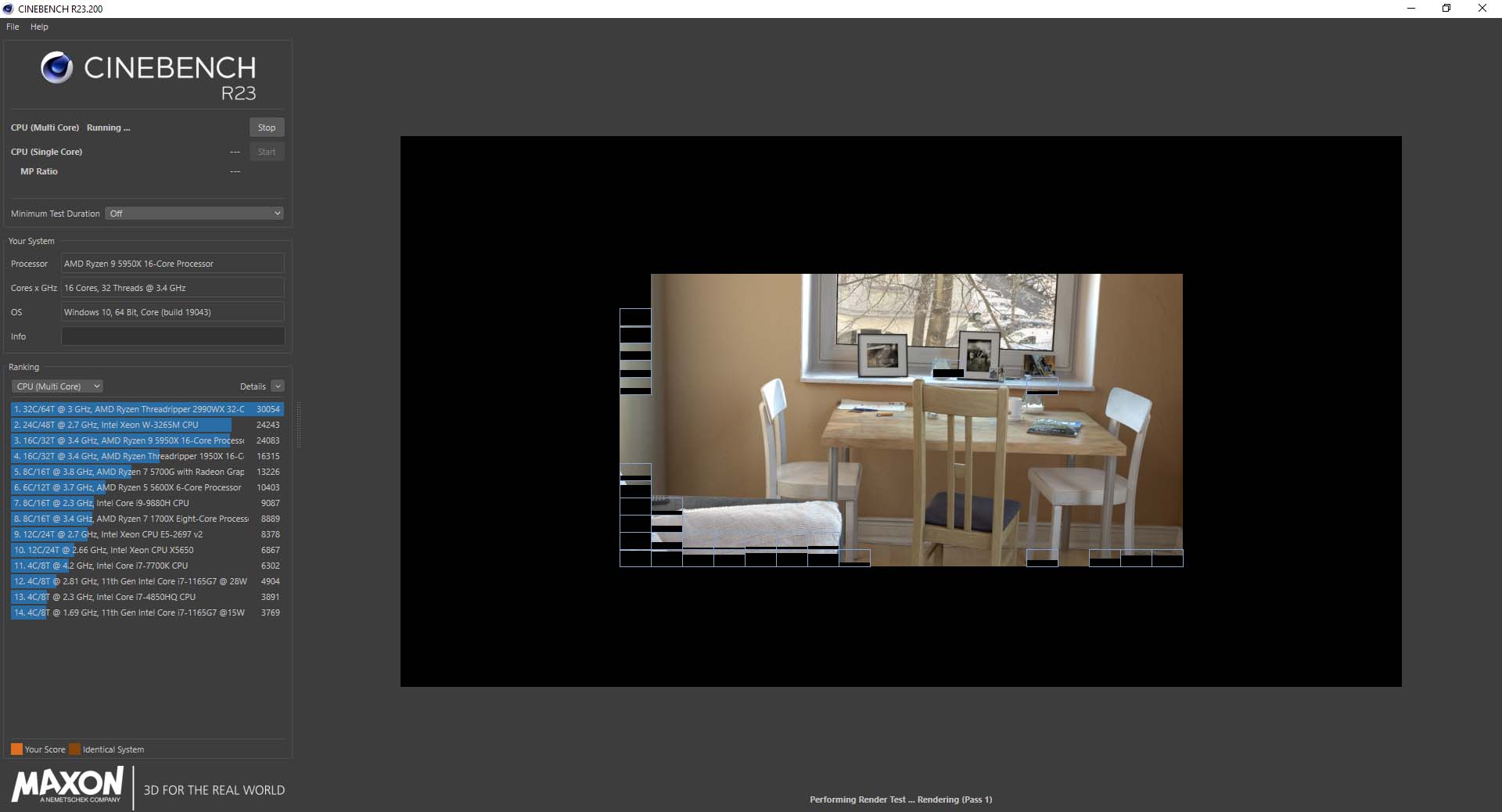
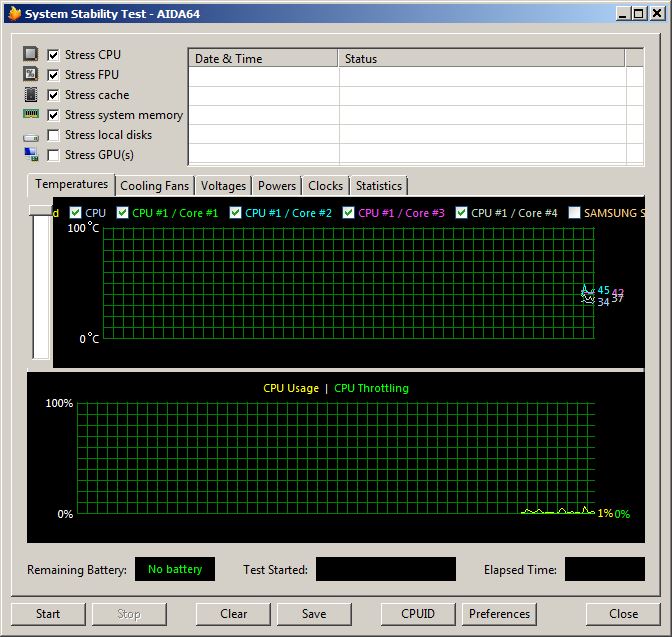
A man-to-man feed of Cinebench isn't going to bear witness your system stable for unsound periods, though. You could try Cinebench's stability test for 30 proceedings for that, but you can also use either an app called AIDA 64 or one called Prime95.
Represent warned, these are accentuat tests by name and stress tests by nature, so they should truly only be in use to make sure your system is up to unit of time use and not for too semipermanent.
What you're looking for when testing an overclock, first of all, is that your PC doesn't bout cancelled, restart, or BSoD during the test. That usually means something is awry. In this instance, it's time to head back to BIOS or Ryzen Master and try a lower clock speed or a higher voltage—somewhat, of course.
The unusual thing to get on the lookout for are high temperatures, high voltages, or funny CPU behaviour. So keep an eye connected your monitoring software of selection, measure max and average metrics, and make sure you're not pushing your CPU too far for an every Clarence Shepard Day Jr. overclock.
Remember, sometimes those last few megahertz won't render into any performance whatsoever, but your CPU might call for much higher voltages in order to reach such towering clock speeds. You don't want to push your CPU for No reason, and overclocking for everyday use is more of a interrogation of serious-world gains than it is about chasing bigger and bigger numbers.
Leave that to the professionals.
Since this is Personal computer Gamer, we're really chasing gaming frame rates. A GPU overclock bequeath net you much more in that section, but let's not write off the CPU OC yet. Play a few games to check stability and then grab some matching benchmark numbers to those you got way hindmost initially of this process—I told you they'd go in handy.
If your organisation is stable and your anatomy rate higher, congratulations, you've overclocked your CPU. If your system of rules is stable but your frame rate is the equivalent, well, that's not all that unusual for an AMD CPU nowadays, but at least you can probably run at a lower potential difference.
And if information technology's unstable and your couc rate worse, well, it's second to the beginning with you.

Jacob earned his opening byline piece of writing for his own technical school blog from his hometown in Wales in 2017. From at that place, atomic number 2 regressive to professionally breakage things at PCGamesN, where helium would later win command of the kit up closet as hardware editor in chief. Nowadays, as senior hardware editor at PC Gamer, He spends his days reporting on the latest developments in the engineering science and gambling industriousness. When he's non writing about GPUs and CPUs, you'll find him trying to get as far inaccurate from the nonclassical world as attainable by unbroken camping.

Source: https://www.pcgamer.com/amd-ryzen-overclock/
Posted by: chesnutrilet1967.blogspot.com
0 Response to "How to overclock an AMD Ryzen CPU | PC Gamer - chesnutrilet1967"
Post a Comment